

Prepare for AI
Stage 1 of 4
Prepare: get ready for AI
Get your data, workflows and people ready for AI
We clean the data AI will rely on, map the workflows it will change, and train your people at five levels of AI skill, from Use to Operate.
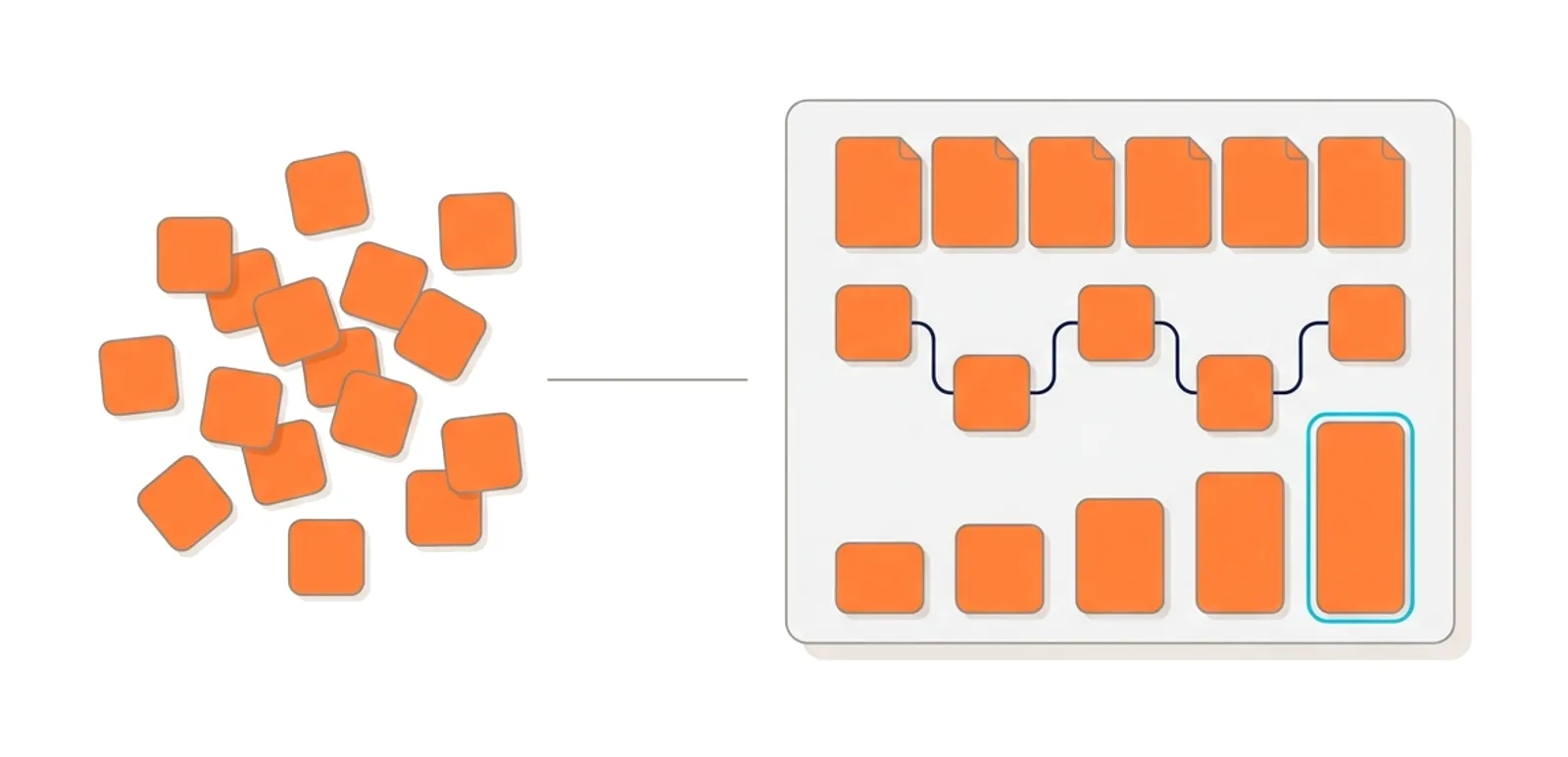
What Prepare covers
AI training at five levels
Each person is placed at one of five levels, from Use to Operate, and trained to the next in a cohort at their level.
How training runsProcess mapping
We map the workflows AI will change: where the time goes, where the judgement sits and who each change affects.
Systems and data mapping
We map the systems you run and the data AI will rely on, then collate and clean that data so AI can use it.
The readiness check
A three-minute check of where your organisation stands on AI today, before any of the work starts.
Take the readiness check
Three kinds of readiness
- Data readiness: we map and collate your data, and clean what AI will rely on.
- Workflow mapping: we map the workflows AI will change, so you know where it pays and who it affects.
- Training and people readiness: AI training at five levels, from Use to Operate. Each person is placed at a level first, because one team's people span every level.
How it works
Placed at a level, trained to the next
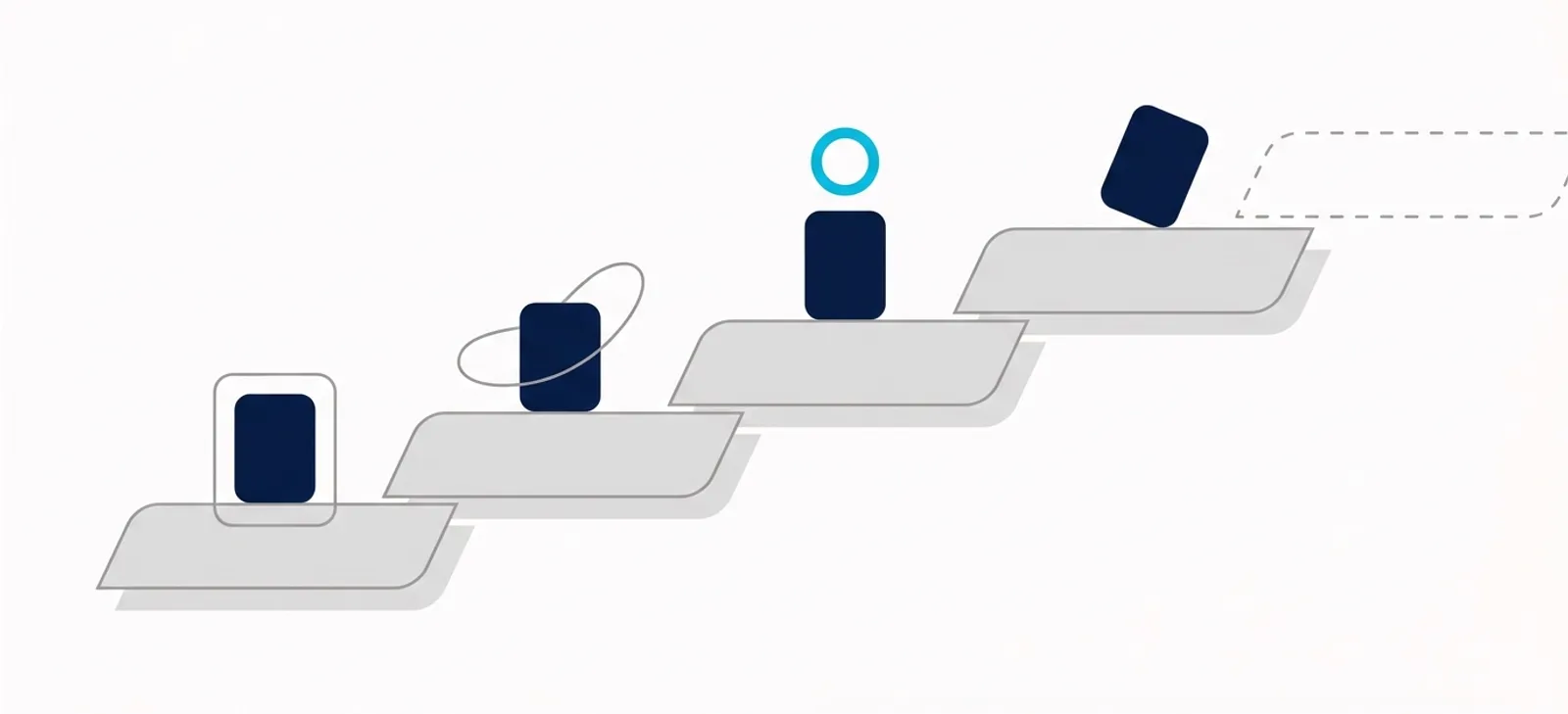
Step 1
Placement
each person takes an entry assessment that places them at a level, because one team's people often span several levels. Cohorts form by level.
Step 2
Training
cohorts, workshops or intensives at that level, on your own tools where the format allows, or self-paced learning where no cohort fits.
Step 3
Award
each level ends in an assessment of the person's own work, marked by someone who did not teach them. A completion badge does not count.
Step 4
Next
each team leaves with a 30-day plan for the jobs it will take on. When a job needs a higher level, the team trains up or brings in an engineer at that level.
Not sure where your team stands? Take the three-minute readiness check.
The five levels
Training at each of the five levels
A level says what a person can do with AI, from the newest user to the board. Forward Deployed AI uses the same five levels and sets out the skills an engineer needs at each level.
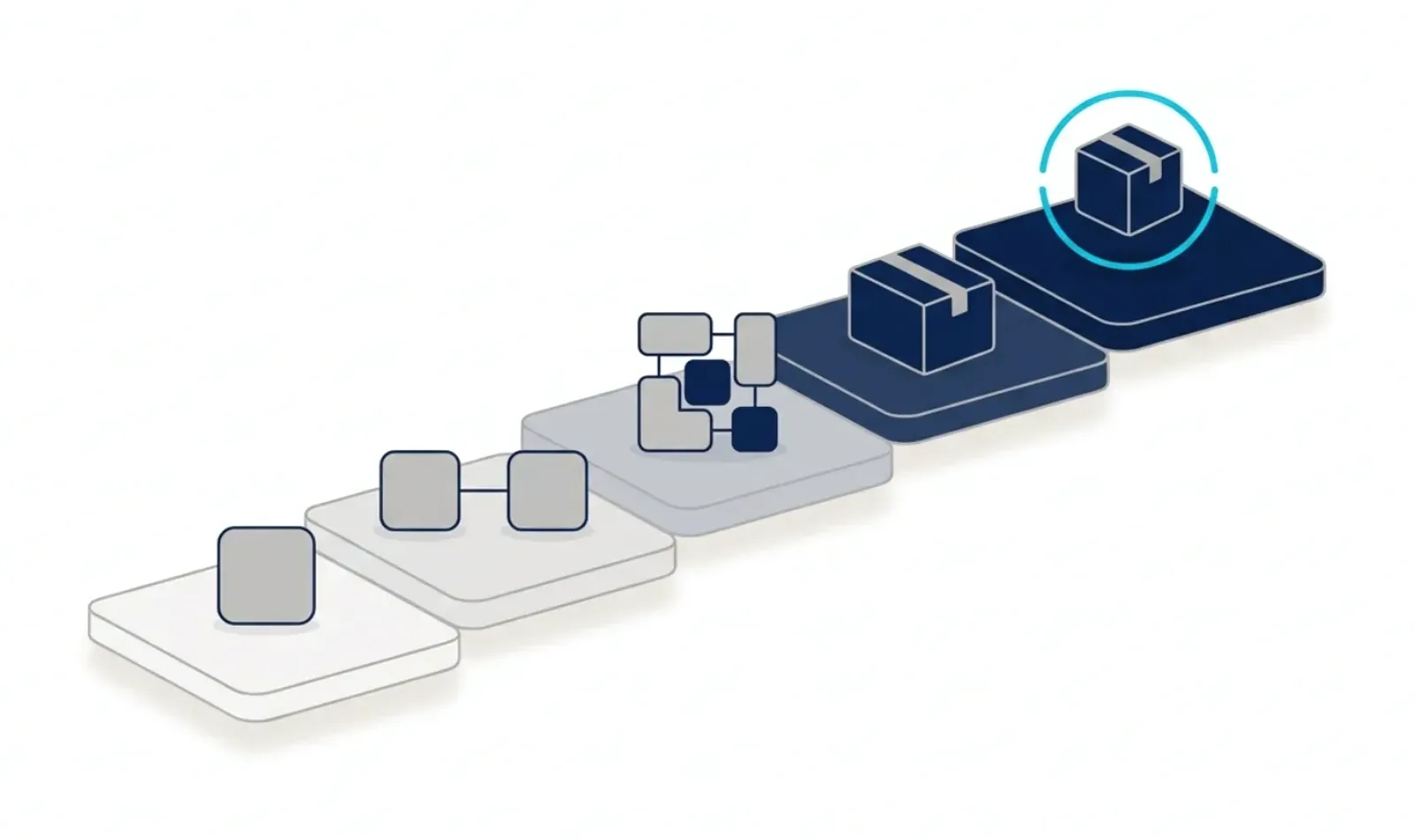
Level 1: Use
Prompting well and reusing what works: using the approved assistant within the firm's data rule, writing a brief that produces a checkable answer, catching the assistant's errors and saving a working brief as a skill a colleague can run.
- Who it is for
- Everyone in a function team, from finance and operations to sales, HR and customer service, and the owners and staff of small firms.
- How it runs
- Weekly cohort sessions, a one-day workshop on your own tools, or self-paced learning.
- How it is awarded
- A work-sample assessment on the learner's own work, marked by someone who did not teach them.
Level 2: Connect
Linking an AI assistant to company files, mail and systems, and running the adoption that follows: auditing permissions before connecting, connecting read-only first and keeping the assistant answering from the approved document.
- Who it is for
- People who already prompt well, function leads, IT and data owners, and the owner or office manager of a small firm.
- How it runs
- A two-day intensive, a weekly cohort, or self-paced learning, with a shorter owner route for small firms.
- How it is awarded
- Observed tasks on a fresh system set up with traps, marked by a trainer who did not teach the learner.
Level 3: Build
Building one no-code tool or single-task agent that colleagues depend on, and proving it works before anyone relies on it. The course stops where code starts.
- Who it is for
- Business staff and junior engineers who finished Level 2: finance, operations, customer service and compliance staff who will build.
- How it runs
- An intensive, a weekly cohort, or self-paced learning, with a shadow run on a real task.
- How it is awarded
- A build-and-check practical, marked by a QuantSpark engineer.
Level 4: Ship
Shipping software where an agent writes much of the code and a person owns the result: taking a feature from specification to production through tests, evals, review, security checks and a cost budget.
- Who it is for
- Engineers and technical product people who build or maintain software.
- How it runs
- A three-day intensive, a weekly cohort, or self-paced learning.
- How it is awarded
- A one-day practical on a repository the learner has not seen, with a short viva, marked by a senior QuantSpark engineer.
Level 5: Operate
Running agentic workflows on core systems with oversight, and reporting on them to a board: choosing the workflow, designing and testing its controls, showing its cost and value, handling an incident and writing the board paper.
- Who it is for
- Leaders, boards and private equity operating partners who oversee such workflows, with no coding, and the engineers who build them.
- How it runs
- A board briefing, a three-day workshop or a weekly cohort.
- How it is awarded
- A supervised exit assessment and a take-home pack.
The five levels at a glance
What a person can do at each level, the tools they use and the engineer we supply when a job needs more than your team can do yet.
Use
Write clear prompts, check the output, share what works.
We train to it: weekly cohort sessions, a one-day workshop or self-paced learning
We supply: a level 1 AI adoption engineer
Connect
Link the assistant to company files, mail and systems.
We train to it: a two-day intensive, a weekly cohort or self-paced learning
We supply: a level 2 AI integration engineer
Build
Build no-code tools and simple agents: AI that does one job by itself, checked by a person.
We train to it: an intensive, a weekly cohort or self-paced learning
We supply: a level 3 AI agent engineer
Ship
Build and release software with AI coding tools, tests and access controls.
We train to it: a three-day intensive, a weekly cohort or self-paced learning
We supply: a level 4 AI production engineer
Operate
Run AI agents on core systems such as finance, with oversight.
We train to it: a board briefing, a three-day workshop or a weekly cohort
We supply: the level 5 AI operating partner
- 1Level 1Use
Write clear prompts, check the output, share what works
Tools (examples)ChatGPT, Claude, Copilot, Gemini; skills and projectsHow we train people to itWeekly cohort sessions, a one-day workshop or self-paced learningEngineers we supplyA level 1 AI adoption engineer: licences, prompts and simple automationsWaveIndividual - 2Level 2Connect
Link the assistant to company files, mail and systems
Tools (examples)Connectors, Office add-ins, scheduled tasksHow we train people to itA two-day intensive, a weekly cohort or self-paced learningEngineers we supplyA level 2 AI integration engineer: connects tools and data, and runs adoptionWaveIndividual, moving to team - 3Level 3Build
Build no-code tools and simple agents: AI that does one job by itself, checked by a person
Tools (examples)App builders such as Lovable and ReplitHow we train people to itAn intensive, a weekly cohort or self-paced learningEngineers we supplyA level 3 AI agent engineer: builds single-job agents and toolsWaveTeam - 4Level 4Ship
Build and release software with AI coding tools, tests and access controls
Tools (examples)Claude Code, Codex, GitHub, Supabase, VercelHow we train people to itA three-day intensive, a weekly cohort or self-paced learningEngineers we supplyA level 4 AI production engineer, a senior engineer who owns quality and brings coding agents into engineering teamsWaveTeam, moving to organisation - 5Level 5Operate
Run AI agents on core systems such as finance, with oversight
Tools (examples)Agent frameworks; evaluation, orchestration and monitoring toolsHow we train people to itA board briefing, a three-day workshop or a weekly cohortEngineers we supplyThe level 5 AI operating partner, who builds the first prototype and advises the boardWaveOrganisation
Who buys it, and when
Small firms as well as larger ones: leadership teams, function heads and their teams, in cohorts by level. Private equity owners can buy cohorts for a whole portfolio. It usually starts when:
- licences have been bought and few people use them;
- staff are anxious about being replaced;
- a few people have raced ahead and the team has not followed.
Three Waves of AI Transformation
AI value compounds from individual to team to organisation. Levels describe people, and waves describe where the organisation has got to, so a course plan says which wave it is aiming for.
Wave 1
Productivity gains
Drafting, research and personal automation. Levels 1 and 2.
Individual
Wave 2
Insight generation
Shared skills and agents, with routine handoffs automated. Levels 3 and 4.
Team
Wave 3
Strategic disruption
Whole workflows rebuilt on proprietary data and process, with governance built in. Level 5.
Organisation
Services at this stage
In short
- Clean, collated data that AI can use
- Workflows mapped, so you know where AI fits
- People trained and ready, level by level


Questions we are asked
Do we have to start with training?
What do you need from our people and our data?
How do you know the training worked?
Who owns the data and workflow maps?
What are the five levels of AI skill?
New AI guides and case studies, by email
Our newsletter sends new guides, glossary terms and case studies as we publish them.
Talk to us about your business
A 30-minute call with Adam or Wanda. We will tell you plainly whether we are the right fit.