
Generative AI that turns days of government research into minutes
QuantSpark built a generative-AI research application for a UK government department, letting staff search, generate and summarise large volumes of international documents, resolutions and records. Work that once took up to 10 hours per query was reduced to minutes.
- 1-2 days
- research time saved per typical query
research time saved per typical query
1-2 days
- Research time on a typical query cut from up to ten hours of manual work to minutes, an estimated saving of one to two days of researcher time per query, reported as an evidenced pilot outcome in the department's own pilot concluding report.
- Generated a searchable database that the department estimates would take an analyst around ten years to read manually, illustrating the scale of material now accessible rather than a measured throughput figure.
- Increased confidence in the evidence underpinning briefing materials for policy and analytical staff.
- Strengthened the department's ability to counter misinformation, reported alongside the confidence gain as a qualitative pilot outcome.
The problem
A UK government department needed to research large volumes of international documents, resolutions and records to support its policy and analytical staff. That material was spread across multiple disparate databases with no unified view, so before analysis could even begin, staff faced a fragmented search across several systems just to establish what evidence existed.
Answering a single research question could take up to ten hours of manual work under those conditions. That consumed finite specialist resource on low-value data gathering rather than the higher-value analysis the department actually needed from its policy and analytical staff.
Where research was incomplete, teams were left at a disadvantage in the analysis and advice they could deliver.
How we delivered it
Discovery and user research
Ran focus-group-based discovery with policy and analytical staff to establish how they actually searched for, used and reported on research material, shaping requirements before any build began.
Data architecture on Azure
Built a medallion data architecture on Microsoft Azure, using Data Factory for ingestion, Databricks for processing, Data Lake Gen2 for storage and AI Search for retrieval, to bring previously disparate databases into a single unified layer.
Platform configuration
Configured QuantSpark's Intelligence Platform software against the department's defined data sources, applying large language model and natural language processing techniques to enable search, generation and summarisation of source material.
Productionisation
Moved the solution from initial build to a production-ready service through iterative, agile delivery cycles rather than a single release.
Secure deployment
Worked through technical obstacles specific to deploying a generative AI web application inside the department's secure environment.
Implementation and adoption
Trained users on the live tool to drive adoption, since time savings only materialise once staff actually use the application in their day-to-day research.
Ask
Staff member enters a research question in natural language, rather than manually searching each source system in turn.
Search
The platform searches across the department's data, now unified behind the Azure data layer instead of sitting in separate disparate databases.
Generate and summarise
LLM and NLP techniques surface the relevant international documents, resolutions and records and produce a summary of the material.
Review and use
The analyst reviews the generated summary and incorporates it into policy analysis or briefing material, in minutes rather than the hours the manual process required.
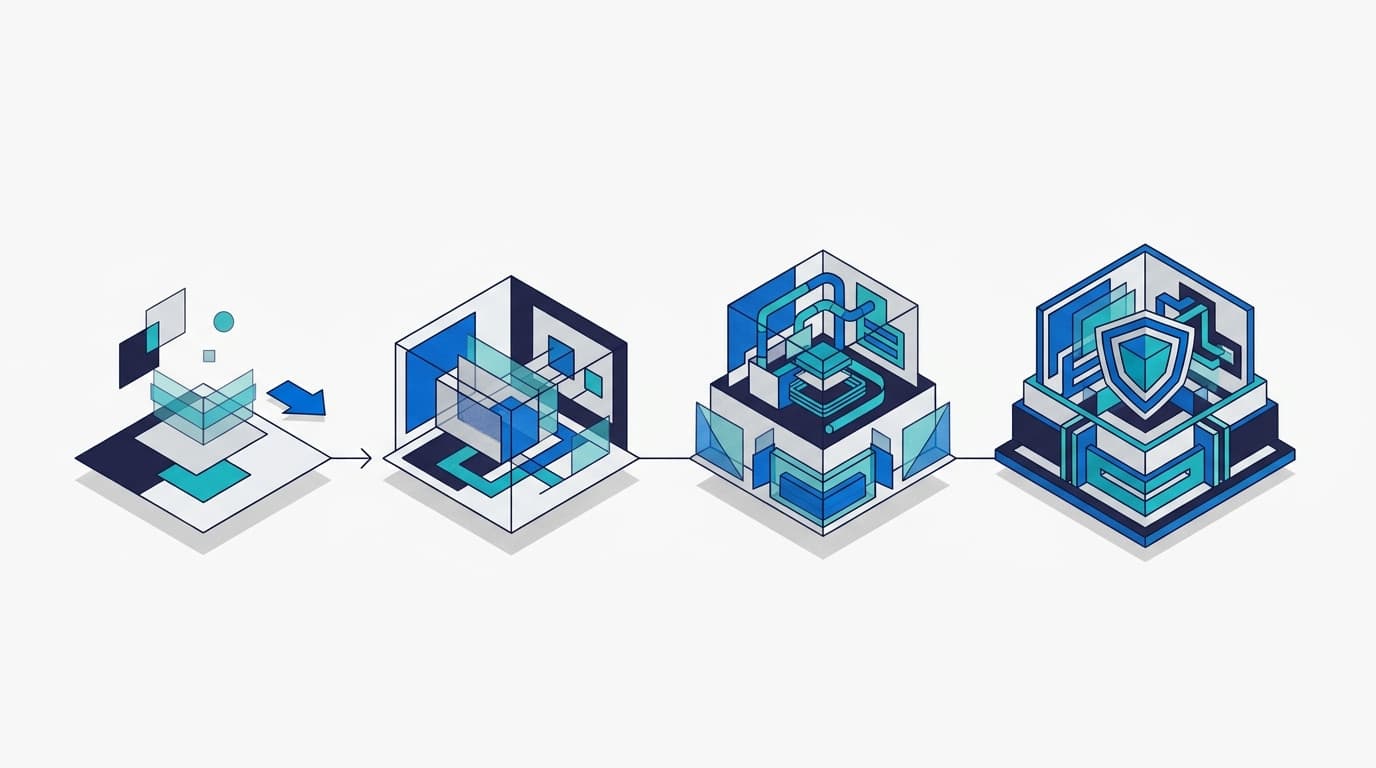
How a research question moves through the deployed tool, from a plain-language query to a reviewed briefing input.
Built with
Microsoft Azure (Data Factory, Databricks, Data Lake Gen2, AI Search)
Cloud data platform hosting the medallion architecture that unifies the department's previously disparate databases and supports search and retrieval.
QuantSpark Intelligence Platform
Configured web application layer through which staff search, generate and summarise research material.
Large language model (LLM) and natural language processing (NLP) techniques
Underlying generative and language-understanding methods used for search, generation and summarisation; described categorically as no specific model is named in the source.
Return on investment
Delivered return1-2 days
research time saved per typical query
What was delivered
- Research time on a typical query cut from up to ten hours of manual work to minutes, an estimated saving of one to two days of researcher time per query, reported as an evidenced pilot outcome in the department's own pilot concluding report.
- Generated a searchable database that the department estimates would take an analyst around ten years to read manually, illustrating the scale of material now accessible rather than a measured throughput figure.
- Increased confidence in the evidence underpinning briefing materials for policy and analytical staff.
- Strengthened the department's ability to counter misinformation, reported alongside the confidence gain as a qualitative pilot outcome.
How the return was measured
The value case is built on time, not a monetary figure. The source reports the manual research time a typical query previously required, up to ten hours for a single research question, against the time it takes once generated and summarised material is available, minutes, giving a reported per-query saving of an estimated one to two days. No headcount, query volume, contract value or salary assumption is given in the source, so this cannot responsibly be annualised or converted into a pound figure; any organisation-wide return would need the frequency of qualifying research questions and the number of staff using the tool, neither of which is stated.
A UK government department cut research time on international documents, resolutions and records from up to ten hours per question to minutes, saving an estimated one to two days of analyst time on every typical research query once QuantSpark's generative AI research assistant went live. That is the headline result from an evidenced pilot, reported in the department's own pilot concluding report.
The problem the tool solved was straightforward but expensive. Policy and analytical staff needed to draw on large volumes of international documents, resolutions and records, but that material sat across multiple disparate databases with no unified view. A single research question could swallow up to ten hours of manual searching and reading before analysis could even begin. That consumed finite specialist resource on low-value data gathering rather than the higher-value analysis the department actually needed, and where research was incomplete, teams were left at a disadvantage.
QuantSpark's response was to configure its Intelligence Platform software against the department's own defined data sources, wrapping large language model and natural language processing techniques in a web application that lets staff search, generate and summarise information on demand. Delivery moved through four stages: discovery, configuration, productionisation and implementation. User discovery ran through focus groups so the tool matched how analysts actually worked, and the team then built and delivered iteratively, in an agile fashion, rather than as a single big release.
Underneath the application sits a data architecture on Microsoft Azure: Data Factory for ingestion, Databricks for processing, Data Lake Gen2 for storage and AI Search for retrieval, arranged in a medallion pattern that progressively refines raw data into clean, queryable layers. That architecture is what let previously disparate databases behave as one unified source. Getting the application live inside the department's secure environment required the team to work through a series of technical obstacles specific to that environment, and go-live was followed by user training to drive adoption.
For the end user, the workflow is now simple. A member of staff asks a research question in natural language; the platform searches across the now-unified data behind the scenes; it generates and summarises the relevant material; and the analyst reviews and folds that synthesis into their own briefing. Steps that used to be manual, hours of searching multiple systems and reading raw source documents, are compressed into a single conversational interaction.
The value case rests on time, not an invented pound figure. Once deployed, the tool saved approximately one to two days of research time per typical query, with individual research questions that once took up to ten hours reduced to minutes. It also generated a searchable database that the department estimates would take an analyst around ten years to read manually, a figure that illustrates scale rather than a measured throughput number. Beyond time, the pilot reported two qualitative gains: greater confidence in the material underpinning briefings, and a strengthened ability to counter misinformation, both plausible knock-on effects of researchers working from a fuller evidence base rather than whatever they could find in the time available.
Read this case study for what it is: an evidenced pilot outcome from the department's own concluding report, not an independently audited figure, and not yet a statement about outcomes at full departmental scale. The reported numbers describe time saved per query and the scale of material now searchable, not a pound-denominated return, headcount affected, or a query volume from which a total organisational saving could be derived. What is clear is the shape of the change: a genuinely disparate, multi-database research burden, met with a single AI-enabled front end sitting on a properly engineered Azure data layer, delivered through focus-group-led, iterative work into a secure government environment.
Figures are drawn from completed QuantSpark engagements. Clients are anonymised by agreement; on a call we will walk you through how each number was measured and, where the client has agreed, put you in touch with a reference.
This engagement drew on several of our practices
Generative AI applications
LLM products, agents, and internal copilots built for measurable uplift.
Typical engagement: 6 to 12 weeks, 2 engineers, outcome-linked pricing.
See the serviceData platform builds
Modern data stack implementations: ingestion, warehouse, transformation, BI.
Typical engagement: 12 to 20 weeks, 2 to 3 engineers, milestone-based pricing.
See the serviceRelated case studies
A leading data-centre market-intelligence provider
An AI roadmap to defend a data moat against generative AI commoditisation

UK central government department
Government department: 80% faster contract review with AI

A private-equity-backed European manufacturer of engineered wood products
Automating order entry from inbox to ERP
Related insights

How AI Coding Assistants are Transforming Software Development: Power, Potential, and Best Practices
AI coding assistants like GitHub Copilot are reshaping software development, enabling faster prototyping and creative problem-solving. While powerful, thoughtful deployment with clear best practices…

The Brunelleschi Lesson: Why Operational AI Demands Both Human Ingenuity and Structural Rigour
Successfully implementing enterprise AI requires a dual focus: engaged human ingenuity and robust data infrastructure. Neglecting either side leads to underperformance, a lesson discernible from historical breakthroughs in art and science.
QuantSpark: Turning AI Ambition into Operational Reality for Private Equity
QuantSpark partners with private equity firms and their portfolio companies to deliver end-to-end AI transformation, combining strategy, AI, and software engineering to build high-ROI applications
Ask about our work
Answers only from our documented case studies
Powered by the same applied-AI approach we deliver for clients
Solving something similar in Public Sector?
Get in touch. We will discuss your challenge and show you what is possible.
Read more on AI for government and the public sector