
Put shelf space where it sells, store by store.
Macrospace optimisation that models how sales respond to space in every store and reallocates within your merchandising rules.
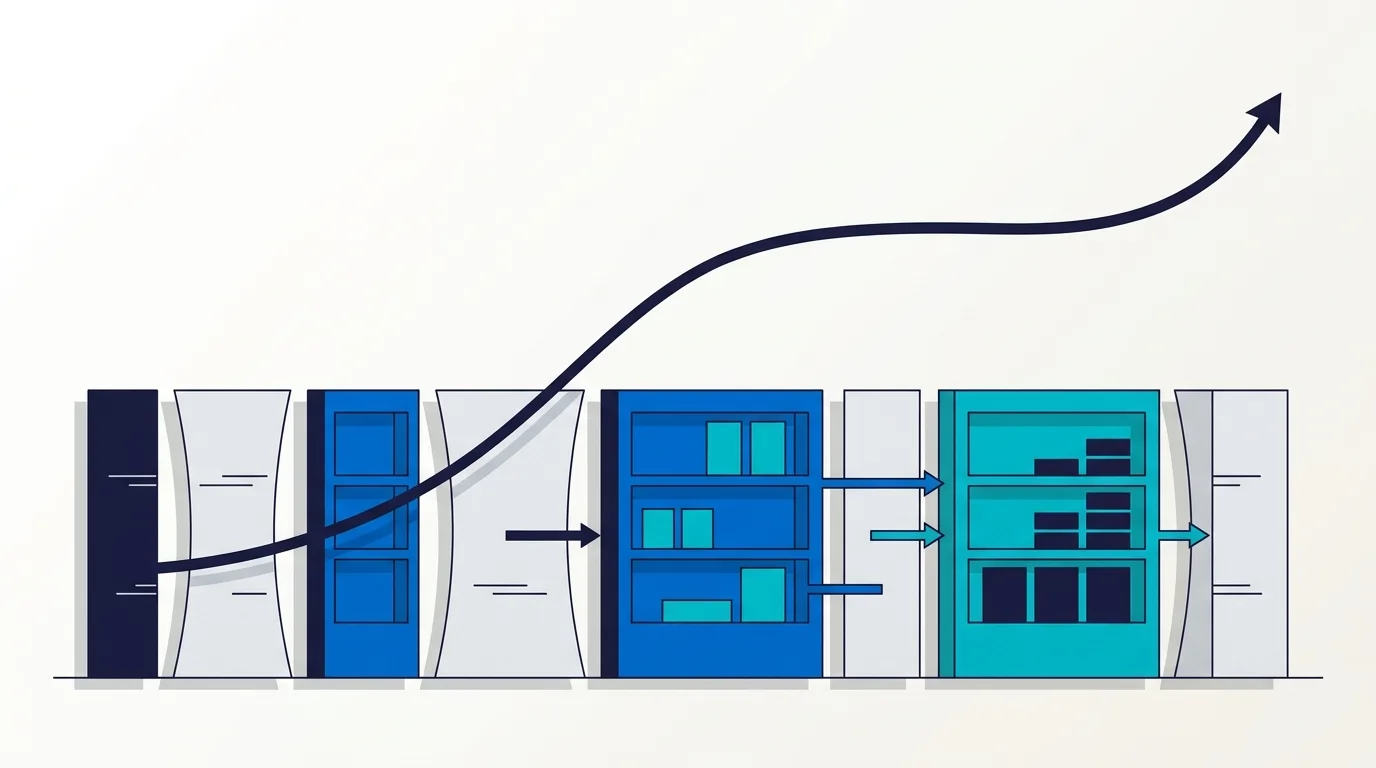
The problem it removes
Space is a finite asset, yet it is usually allocated with the least evidence of any decision in the business.
Gut-feel space decisions
Space is handed out by habit, history and negotiation, not by how each category actually responds to the metres it is given.
Fragmented data
Sales history and space history sit in separate systems, so no one can see the trade-off between the two across the estate.
One-size-fits-all planograms
A single national planogram ignores that the same category earns its space very differently from one store to the next.
Slow manual space reviews
Reworking space by hand takes weeks, so reviews happen rarely and the plan on the shelf is always a step behind.
What RetailCube does
One authenticated app with one job: reallocate shelf space to wherever the next metre sells the most, store by store.
Store-specific recommendations
Recommendations are tailored to each store through size-based store types and optimised clusters, never a single national plan.
Sales-response curve modelling
The Curve Clashing Model fits a sales-response curve for every category in every store, so you can see how sales move as space changes.
Your merchandising rules honoured
Reusable constraint sets hold your minimums, maximums, growth and reduction caps and locked space, so every recommendation stays inside your rules.
A confidence score on every move
Each recommendation carries a confidence score, high, medium or low, drawn from how well the underlying curve fits at overall, store and row level.
A report you can act on
The optimisation report shows current versus recommended space and sales per store, with a per-store view, a category table and CSV export.
Runs on your own data
RetailCube runs on your estate's own sales and space history through an ETL pipeline, behind authenticated, role-gated access.
The process we optimise
The space review: deciding how much of a finite floor each category gets in every store.
A retailer's floor space is fixed. Every extra linear metre given to one category is a metre taken from another. The objective is not to fill the shelves, it is to sell more from the same square metres by giving space to the categories that turn it into sales, store by store.
How it works
From your data to a report you can act on
Five steps, run on your own estate, from loading the history to exporting the recommended space per store.
- 01
Load your data
Your estate's sales and space history flows in through an ETL pipeline, mapped to a two-level category hierarchy and your store estate.
- 02
Prepare and validate
The data is cleaned and checked so that every category, store and space figure is consistent before any modelling begins.
- 03
Model space-to-sales curves
The Curve Clashing Model fits a sales-response curve for each category in each store, learning how sales respond as space changes.
- 04
Reallocate space at the margin
Space moves in 0.1 linear-metre steps to wherever the next metre earns the most extra sales, always inside your constraint sets.
- 05
Review the report and export
You review current versus recommended space and sales per store, weigh each move by its confidence score, and export the detail to CSV.
Optimisation runs complete in the background. You can track their status and open the report the moment a run finishes.
Built with retailers, and honest about every recommendation
RetailCube has been built with and deployed at multi-store retailers. It does not hide behind a single headline number. Every recommendation it makes carries a confidence score, so your merchandising teams can see exactly how much weight to put on each move before they act.
On a call we will walk you through how RetailCube performed on a real estate, and where the retailer has agreed, put you in touch with them directly.
Ask for a referencePricing, markdown, demand and range: our wider retail work
RetailCube does one thing, macrospace. Pricing, markdown, demand forecasting and range optimisation live in our wider retail and consumer practice, not in this product.