
An AI roadmap to defend a data moat against generative AI commoditisation
A leading provider of data-centre market intelligence faced the erosion of its proprietary data moat as generative AI commoditises data synthesis. QuantSpark delivered a four-week AI strategy and roadmap sequencing the shift from data provider to decision platform.
- 4 weeks
- Engagement length
Projected productivity uplift modelled at the roadmap stage (indicative, not a measured outcome)
20%
- The four-week strategy engagement converted into a two-phase implementation follow-on, the clearest evidence that the roadmap earned the client's confidence and further investment.
- Delivered a prioritised, three-horizon roadmap sequencing quick wins, mid-term moat-building and longer-term decision-platform products.
- Produced a buy-versus-build view across the priority AI use cases to steer the client's investment decisions.
- Modelled a projected 20% improvement in productivity and a 10% uplift in customer conversion and retention as indicative, strategy-level projections, explicitly distinguished in the engagement from measured results.
The problem
The client sells market-leading data and insights on the data-centre sector to infrastructure investors, operators and service providers. Its competitive edge has always rested on three things: a proprietary dataset, deep analyst expertise, and a reputation for trusted market intelligence. Generative AI put all three at risk by commoditising the one capability that used to require scarce human skill: synthesising raw signals into usable intelligence.
The exposure was compounded by how the research engine actually worked day to day. Analysts monitored announcements, filings and market signals largely by hand, which capped how fast the business could refresh its intelligence, how much of the market it could cover, and how early it could catch a signal worth acting on.
Worse, the context that made each analyst valuable, the judgement calls, the pattern recognition, the institutional memory, sat siloed on individual machines rather than compounding into a shared asset the whole business could draw on. And too much of the customer's own decision-making happened outside the product entirely, meaning the business was capturing less of the value it created than it should have been.
How we delivered it
Use-case identification and scoring
Generated a prioritised set of candidate AI use cases, each assessed on desirability, feasibility and defensibility so the roadmap invested effort where it would compound rather than commoditise further.
Buy-versus-build assessment
Weighed build-versus-buy for each prioritised use case, giving the client a clear view of where to invest engineering effort and where to adopt existing capability instead.
Value-chain framing
Mapped the business's path from data to intelligence to a decision platform, clarifying where value would be captured next as commoditisation eroded the pure-data layer.
Three-horizon roadmap sequencing
Sequenced the roadmap deliberately: automate commoditised research first, build the internal knowledge moat second, then scale into higher-value decision products third.
Quick-win specification
Defined concrete near-term builds within the first horizon: executive insight summaries, a daily briefing agent, a research automation workbench and a personalised intelligence feed.
Four-week delivery cadence
Ran the full discovery-to-roadmap process in four weeks.
Diagnose the moat
Established how generative AI threatened the proprietary dataset, analyst expertise and trust the business was built on.
Score use cases
Scored candidate AI applications on desirability, feasibility and defensibility.
Map the value chain
Framed the shift from data provider to intelligence layer to decision platform, and weighed build versus buy.
Sequence three horizons
Ordered the roadmap: automate commoditised research, build the knowledge moat, then scale decision products.
Specify quick wins
Defined the first-horizon builds: insight summaries, briefing agent, research workbench, personalised feed.
Hand off to build
Roadmap converted into a Phase 1 and Phase 2 implementation engagement.
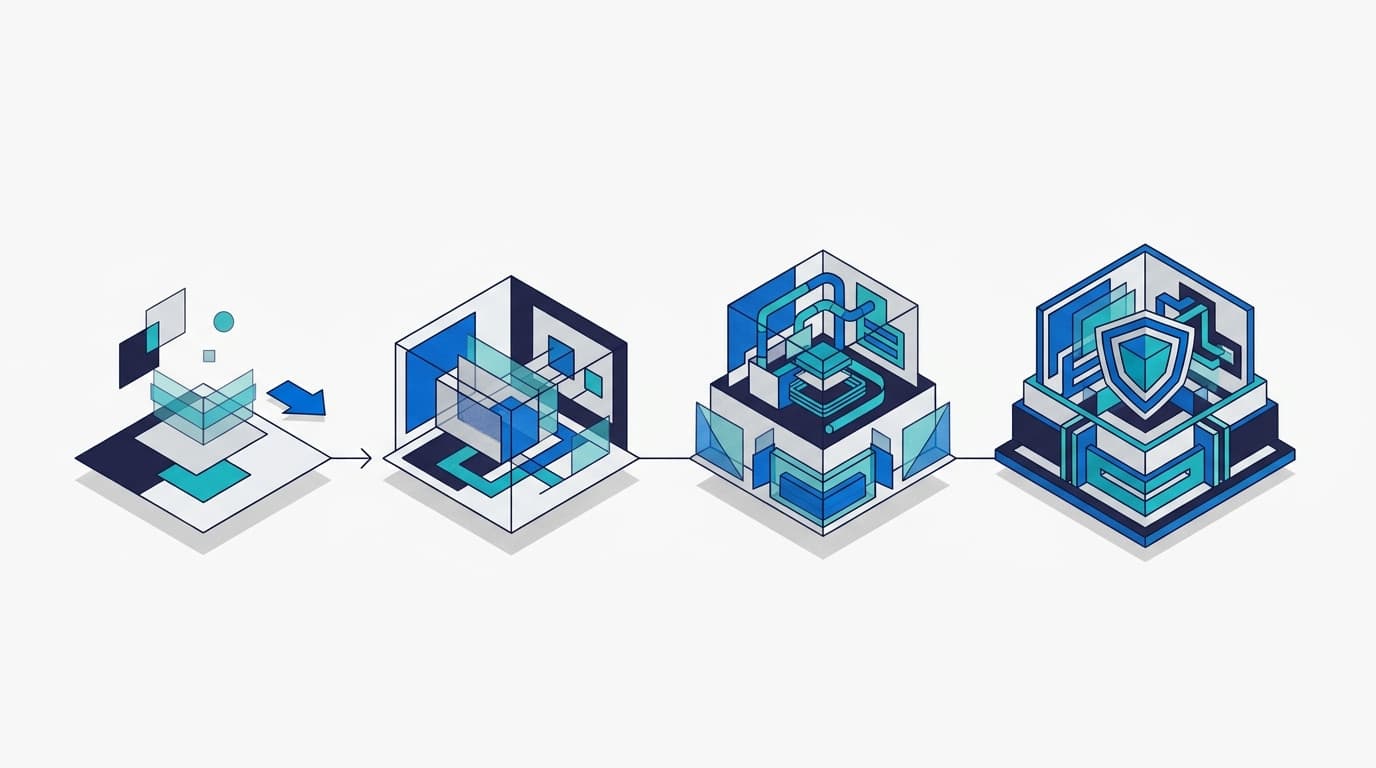
From moat diagnosis to a sequenced AI roadmap
Built with
Research automation workbench (categorical)
Proposed tool to automate the manual monitoring of announcements, filings and market signals that previously relied on analyst time.
Daily briefing agent (categorical)
Proposed automated agent to generate recurring intelligence briefings, replacing part of the manual research cycle.
Executive insight summaries (categorical)
Proposed summarisation layer to condense synthesised intelligence for senior stakeholders.
Personalised intelligence feed (categorical)
Proposed customer-facing layer intended to bring more of the customer's decision-making back inside the product.
Return on investment
Delivered return20%
Projected productivity uplift modelled at the roadmap stage (indicative, not a measured outcome)
What was delivered
- The four-week strategy engagement converted into a two-phase implementation follow-on, the clearest evidence that the roadmap earned the client's confidence and further investment.
- Delivered a prioritised, three-horizon roadmap sequencing quick wins, mid-term moat-building and longer-term decision-platform products.
- Produced a buy-versus-build view across the priority AI use cases to steer the client's investment decisions.
- Modelled a projected 20% improvement in productivity and a 10% uplift in customer conversion and retention as indicative, strategy-level projections, explicitly distinguished in the engagement from measured results.
How the return was measured
The 20% and 10% figures are strategy-stage projections rather than measured outcomes. Uplifts of this kind are typically modelled by estimating, for each prioritised use case, the manual analyst hours it would offset (for example time spent monitoring announcements, filings and market signals) and applying an assumed automation or acceleration rate to that baseline to derive a productivity estimate. The conversion and retention uplift is modelled separately, from the expected effect of faster, more personalised intelligence delivery (via the proposed briefing agent and personalised feed) on customer engagement and renewal likelihood. No client-specific baseline figures, headcounts, costs or revenue values were disclosed in the source, so no derived monetary value can responsibly be stated; only the source's own percentage projections are repeated here, clearly labelled as indicative.
A four-week AI strategy engagement for a data-centre market intelligence provider converted directly into a two-phase implementation contract, the clearest evidence that the roadmap earned the client's confidence. The work reframed the business's trajectory from data provider to decision platform, and modelled how sequencing three horizons of AI adoption could unlock a projected 20% improvement in productivity and a 10% uplift in customer conversion and retention. These are indicative, strategy-stage projections, not measured results; the clearest evidence of value remains the separate fact that the client funded a two-phase implementation build off the back of the four-week discovery.
The problem: a proprietary moat under threat
The client sells market-leading data and insights on the data-centre sector to infrastructure investors, operators and service providers. Its competitive edge has always rested on three things: a proprietary dataset, deep analyst expertise, and a reputation for trusted market intelligence. Generative AI threatened all three at once by commoditising the one capability that used to require scarce human skill, turning raw signals into usable intelligence.
The exposure was compounded by how the research engine actually worked. Analysts monitored announcements, filings and market signals largely by hand, which capped how fast the business could refresh its intelligence, how much of the market it could cover, and how early it could catch a signal worth acting on. Worse, the context that made each analyst valuable, the judgement calls and pattern recognition built up over years, sat siloed on individual machines rather than compounding into a shared institutional asset. And too much of the customer's own decision-making happened outside the product entirely, meaning the business was capturing less of the value it created than it should have been.
Methodology: score, sequence, and de-risk the build
QuantSpark ran a structured four-week strategy and roadmap process. The team generated a prioritised set of candidate AI use cases and scored each on desirability, feasibility and defensibility, so effort would go where it compounded the client's advantage rather than accelerating its erosion. Each prioritised use case then carried a buy-versus-build assessment, giving the client a clear view of where to invest engineering effort and where to adopt existing capability instead.
Underpinning both was a value-chain reframe: the business's path from data, to intelligence, to a decision platform. That framing clarified where value would actually be captured as the pure-data layer commoditised further, and it drove the roadmap's sequencing logic. Rather than a flat list of initiatives, QuantSpark ordered the work into three horizons: automate commoditised research first, build the internal knowledge moat second, then scale into higher-value decision products third. Within the first horizon, the team specified concrete quick wins: executive insight summaries, a daily briefing agent, a research automation workbench and a personalised intelligence feed, giving the client an immediately actionable starting point rather than an abstract strategy document.
Systems and workflow
None of the quick-win concepts were named proprietary tools; they were categories of AI-enabled capability designed to sit inside the client's existing workflow. The research automation workbench and daily briefing agent targeted the manual monitoring bottleneck directly. The executive insight summaries addressed how synthesised intelligence reached senior stakeholders. The personalised intelligence feed was aimed squarely at the leakage problem: pulling more of the customer's decision-making back inside the product rather than leaving it to happen elsewhere.
Value and the case for advisory work
The clearest proof of value is not a metric at all: the client converted a four-week discovery engagement into a two-phase implementation contract, choosing to fund the build rather than shelve the roadmap. Separately, the strategy modelled a projected 20% improvement in productivity and a 10% uplift in customer conversion and retention. Figures like these are typically modelled by estimating the manual analyst time each prioritised use case would offset, and the expected effect of faster, more personalised intelligence delivery on how customers engage with and renew the product. They are indicative planning assumptions intended to justify investment, explicitly distinguished in the engagement from measured, post-deployment results.
For a business whose entire commercial identity rested on being the trusted synthesiser of a specialist market, the roadmap's real achievement was sequencing: converting an existential threat into an ordered plan that protected the moat in the near term while building the case for something more defensible in the long term, a decision platform rather than a data feed.
Figures are drawn from completed QuantSpark engagements. Clients are anonymised by agreement; on a call we will walk you through how each number was measured and, where the client has agreed, put you in touch with a reference.
This engagement used our Generative AI applications practice
Related case studies

A global specialist contract research organisation
A structured roadmap for AI in a regulated contract research organisation

A UK government department
Generative AI that turns days of government research into minutes

UK central government department
Government department: 80% faster contract review with AI
Related insights

How AI Coding Assistants are Transforming Software Development: Power, Potential, and Best Practices
AI coding assistants like GitHub Copilot are reshaping software development, enabling faster prototyping and creative problem-solving. While powerful, thoughtful deployment with clear best practices…

The Brunelleschi Lesson: Why Operational AI Demands Both Human Ingenuity and Structural Rigour
Successfully implementing enterprise AI requires a dual focus: engaged human ingenuity and robust data infrastructure. Neglecting either side leads to underperformance, a lesson discernible from historical breakthroughs in art and science.

QuantSpark: Turning AI Ambition into Operational Reality for Private Equity
QuantSpark partners with private equity firms and their portfolio companies to deliver end-to-end AI transformation, combining strategy, AI, and software engineering to build high-ROI applications
Ask about our work
Answers only from our documented case studies
Powered by the same applied-AI approach we deliver for clients
Solving something similar in SaaS & Tech?
Get in touch. We will discuss your challenge and show you what is possible.
Read more on AI for SaaS and technology