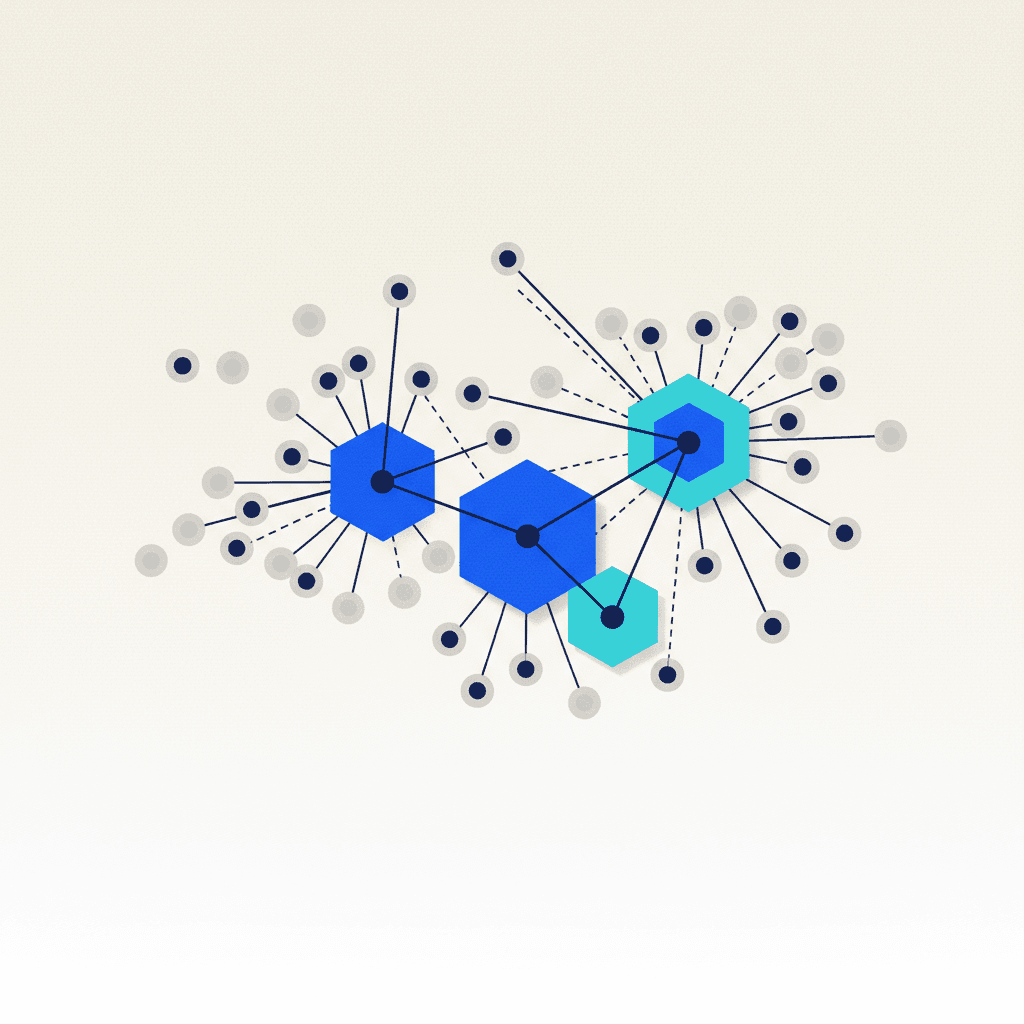
Sourcing is a search and memory problem
Global private equity is sitting on roughly $3.7 trillion of dry powder at the start of 2026, with more than $1.1 trillion of that sitting inside buyout funds, according to Preqin. Nearly a quarter of the buyout pile has been waiting four years or more. At the same time, McKinsey estimates that around 16,000 portfolio companies globally are now older than four years, representing 52 per cent of buyout-backed inventory and the highest exit backlog on record. The pressure to deploy is meeting the pressure to exit, and the space in the middle is occupied by deal teams trying to sort through more opportunities, faster, than at any point in the last decade.
The traditional view of private equity deal sourcing is that it is a relationship business. You build a network of bankers, advisors, founders and other PE firms. You take their calls. Eventually they tell you about something interesting. You take a look. You either bid or you do not.
This is still mostly true. But it disguises a much less glamorous truth, which is that for every deal that comes in through the network, the firm is also screening hundreds of other opportunities. Axial and Street of Walls data suggests the average PE firm evaluates roughly 80 to 100 opportunities for every one that closes, with funnel conversion rates sitting between 1 and 1.5 per cent. Most of that work is done by junior analysts spending their evenings searching Companies House, reading filings, checking competitor sets, and trying to remember whether someone three months ago mentioned that the founder was thinking about selling. PE analysts routinely log 60 to 70 hour weeks, and in live deal cycles that stretches well beyond 80.
Deal sourcing, in other words, is mostly a search-and-memory problem with a relationship layer on top.
AI is very good at search-and-memory problems.
The funnel has not got easier
If anything, the funnel has got harder. Bain's 2026 Global Private Equity Report notes that 2025 deal value was propped up by a small number of megadeals: just 13 transactions above $10 billion accounted for $274 billion of the global gain, 11 of them in the US. Strip those out and the mid-market picture is competitive, crowded, and still trading at elevated multiples. Funds are fighting over a narrower set of high-quality assets, and the marginal return on a better sourcing process is no longer theoretical.
The firms that have read this correctly have started investing in the mechanics of how the top of the funnel actually works. EQT has been running its internal Motherbrain platform since 2016. It now ingests more than 50 external data sources, maintains in the order of 140,000 data points per target, and has been credited with sourcing at least 15 investments, including a $2.2 billion tech buyout. Every EQT private equity professional has been onboarded to the system, and it now functions as the firm's augmented CRM rather than a bolt-on tool. Bain's own AI-in-M&A work estimates that AI can identify around 195 relevant companies in the time a junior analyst takes to properly evaluate one.
This is not a niche experiment. Bain's 2025 survey work found that more than 60 per cent of PE firms are now using at least one tool to improve sourcing, screening, or diligence, and that around 80 per cent of PE workflows already depend on technology for sourcing, diligence and portfolio management. 95 per cent of surveyed firms said they planned to increase AI investment over the following 18 months. Firms using AI in deal sourcing report 10 to 15 per cent improvements in lead quality and roughly 20 per cent reductions in acquisition costs, per the same research.
What we have seen work
The PE firms we have built sourcing tools for are not using AI to replace the relationship layer. They are using it to remove the friction from the search-and-memory layer underneath.
Three things in particular.
Continuous market scanning. Instead of running quarterly market maps by hand, the firm has a system that continuously ingests filings, news, hiring patterns, web traffic, funding announcements and product launches across a defined set of sectors. When something interesting happens, the system flags it. This is roughly what Motherbrain does for EQT and what a handful of mid-market firms in London and the Nordics have quietly built for themselves.
Structured comparables on demand. When an opportunity comes in, the analyst can ask the system "show me UK companies with £20 to £60 million of revenue, EBITDA margins above 15 per cent, in this sub-sector, that have transacted in the last three years" and get an answer in seconds rather than days. The data was always available. It just was not searchable in the right shape.
Relationship memory. Every interaction with a target company, banker, founder or advisor is captured and surfaced when the next interaction happens. So the partner walking into a meeting knows that the founder mentioned wanting to sell when they spoke 14 months ago, and that a rival GP met the same management team last quarter.
None of these are particularly novel as ideas. The reason most firms do not have them is that the off-the-shelf CRM and the off-the-shelf research tools do not connect, and nobody at the firm has the time or the technical depth to wire them together properly. The firms that have cracked it tend to have a small internal engineering capability, or a trusted build partner who understands both the LLM stack and the way an IC paper actually gets written.
The 3x figure
One of our clients, a mid-cap PE firm, measured the time their analysts spent on a typical screening task before and after we built their sourcing platform. Before, a screening cycle took roughly six weeks. After, it took two. They were processing roughly the same volume of opportunities but at three times the speed. The freed-up analyst time went into deeper diligence on the highest-conviction targets, and the conversion rate from first meeting to LOI improved materially in the following two quarters.
This is not a story about AI replacing analysts. It is a story about analysts spending more time on the work that needs human judgement and less time on the work that needs a search engine. The 3x came from the boring layer, not the clever layer. And in a market where there is $1.1 trillion of buyout dry powder chasing a thinner set of quality assets, the boring layer is where the edge lives.
Sources
- Bain & Company, Global Private Equity Report 2026: https://www.bain.com/insights/topics/global-private-equity-report/
- Bain & Company, Private Equity Outlook 2026: Gaining Traction: https://www.bain.com/insights/outlook-gaining-traction-global-private-equity-report-2026/
- Bain & Company, Generative AI in M&A: You're Not Behind Yet (2025): https://www.bain.com/insights/generative-ai-m-and-a-report-2025/
- Preqin, Global Private Markets Reports 2025/2026: https://www.businesswire.com/news/home/20251217642676/en/
- McKinsey, Global Private Markets Report 2026 (exit backlog data): https://www.mckinsey.com/industries/private-capital/our-insights/beating-the-odds-how-private-equity-firms-can-improve-exit-prospects
- EQT Group, Motherbrain: https://eqtgroup.com/about/motherbrain
- Axial, The Private Equity Deal Sourcing Playbook: https://www.axial.net/forum/private-equity-deal-sourcing-playbook/
- Street of Walls, PE Funnel: From Sourcing to Closing: https://www.streetofwalls.com/articles/private-equity/learn-the-basics/private-equity-deals-sourcing-to-closing/
- Mergers & Inquisitions, Private Equity Analyst Hours and Workload: https://mergersandinquisitions.com/private-equity-analyst/
- World Economic Forum, How tech innovations are transforming private equity (2025): https://www.weforum.org/stories/2025/07/how-tech-innovations-are-transforming-private-equity/
CEO and Founder
Adam founded QuantSpark in 2016 to bridge the gap between strategy consulting and engineering. He has worked across financial services, retail and the public sector, and previously led data and analytics work for FTSE 100 organisations. He also runs Tech Against Terrorism, a UN-backed counter-terrorism initiative.